How to Create and Optimize Google Business Profile Posts for US Businesses
Understanding Google Business Profile Posts and Why They Matter
What Google Business Profile Posts Are and Where They Appear
Google Business Profile (GBP) posts are short, high-visibility updates that businesses can publish directly on their Google listings. These posts appear prominently in Google Search results and Google Maps, often right alongside essential business information such as reviews, hours, and contact details.
Users may see GBP posts in several places:
- The Knowledge Panel when searching for a specific business name
- The local pack (map results) when searching for local services
- Directly on the business’s profile within Google Maps
On mobile devices—where most local searches now happen—GBP posts are especially powerful because they appear directly in the scroll path of high-intent users. Unlike social media posts designed for browsing or entertainment, GBP posts are meant to deliver quick, decision-focused information to people already searching for a service or product.
These posts can influence first impressions, reinforce trust, and encourage actions such as calls, bookings, direction requests, or website visits—all without the user ever leaving Google.
Benefits of Using GBP Posts for US Local Businesses
For US-based local businesses, GBP posts offer several tangible benefits:
- Increased visibility in local search results
- Higher click-through rates to websites or booking pages
- More phone calls and in-store visits
- A more active, trustworthy-looking business profile
Regular posting signals that a business is open, responsive, and engaged, which is reassuring for potential customers. GBP posts also give businesses a way to promote offers, events, products, and seasonal updates exactly when users are searching.
From an SEO and marketing perspective, posts support broader goals by reinforcing brand messaging, highlighting US-specific holidays or promotions, and encouraging engagement. While posts are not a direct ranking factor, user interactions—such as clicks and actions—can act as positive quality signals over time.
Key Limitations and Rules You Must Understand
GBP posts come with limitations that businesses need to respect:
- Character limits restrict how much text you can include
- Certain post types expire or lose prominence after a set period
- Media formats must meet Google’s specifications
Posts are not a replacement for a website or social media strategy. Instead, they function as a high-intent supplement designed to influence decisions at the moment of search.
Google also enforces strict content policies. Misleading claims, spammy language, keyword stuffing, or promotion of prohibited products can result in post removal—or worse, profile suspension. US businesses should always follow Google’s Business Profile Content Policy to protect long-term visibility.
How GBP Posts Fit Into Local SEO and Customer Journeys
GBP posts complement other local SEO elements like website optimization, reviews, citations, and photos. They help reinforce relevance and engagement, even though proximity and prominence remain core ranking factors.
Strategically, posts map well to the customer journey:
- Awareness: Introduce services or expertise
- Consideration: Share FAQs, benefits, or comparisons
- Decision: Promote limited-time offers or events
For US businesses, this might mean holiday promotions, back-to-school services, or local event announcements that align with real-world demand.
Types of Google Business Profile Posts and When to Use Each
What’s New (Update) Posts
“What’s New” posts are general updates used to keep your profile fresh. They’re ideal for announcements, new services, staff introductions, tips, or behind-the-scenes content.
US businesses commonly use these posts to highlight seasonal offerings, new equipment, or operational updates. Even without a deadline, every update should include a clear CTA and a relevant image to encourage engagement.
Offer Posts
Offer posts are built for promotions with a defined start and end date. They include fields for coupon codes, terms, and redemption links, making them highly conversion-focused.
US businesses can align Offer posts with holidays like Memorial Day, Labor Day, or Black Friday. Clear value messaging—what the customer gets and why it matters—is critical. Transparency around terms helps maintain trust and compliance.
Event Posts
Event posts promote time-bound activities such as workshops, grand openings, fundraisers, or webinars. They display event details prominently while active.
Local US examples include charity drives, live music nights, or free consultation days. Strong visuals and clear logistical details help drive both online sign-ups and foot traffic.
Product Posts
Product posts allow businesses to showcase individual items or product lines with images, pricing, and links. These work especially well for retailers, restaurants, salons, and locally focused eCommerce brands.
Featuring bestsellers, new arrivals, or seasonal products keeps profiles relevant and helps customers quickly understand what’s available.
Crafting High-Performing GBP Post Content
Structuring Posts for Clarity and Readability
Most users scan GBP posts on mobile, so clarity is essential. The first sentence should immediately communicate value, as it often functions like a headline.
Effective posts answer four questions quickly:
- What is it?
- Who is it for?
- When does it apply?
- What should the user do next?
Simple language, short paragraphs, and benefit-focused copy consistently outperform long or vague posts.
Using Localized and Service-Specific Keywords Naturally
GBP posts are a great place to reinforce local relevance. Mentioning city names, neighborhoods, or service areas—naturally and sparingly—helps users confirm they’re in the right place.
For example, “Same-day AC repair in Phoenix” is far more effective than generic phrasing. The key is natural integration, not keyword stuffing.
Writing Compelling Headlines and First Lines
Your opening line should clearly highlight the benefit or action:
- “Save 20% on Your First Dental Visit in Dallas”
- “Now Offering Emergency Plumbing Services in Austin”
Action verbs, clarity, and honesty matter more than cleverness. The tone should match the brand—professional, friendly, premium, or family-oriented—while staying concise.
Adding Clear Calls-to-Action (CTAs)
Every post should guide the user toward the next step. Google provides built-in CTA buttons like:
- Call Now
- Book Online
- Learn More
- Get Offer
The CTA should align with user intent. For urgent services, “Call Now” works well. For consultations or bookings, softer CTAs often convert better.
Visual Optimization: Images and Videos in GBP Posts
Choosing the Right Image Types
Images dramatically affect engagement. Offers perform well with clear product visuals or promotional graphics, while Events benefit from photos of people and environments. “What’s New” posts often shine with candid team or behind-the-scenes photos.
Authenticity matters. Overused stock photos can reduce trust, especially for US local businesses competing on personal service.
Technical Image Guidelines
Images should be high-resolution, well-lit, and properly cropped for mobile. JPG or PNG formats typically work best. Avoid cluttered designs, excessive text overlays, or watermarks that distract from the message.
Consistent visual quality across posts reinforces credibility and professionalism.
Using Short Videos for Engagement
Short videos—like quick tours, demos, or testimonials—can stand out in GBP feeds. They should be concise, visually clear, and understandable without sound.
Even smartphone videos can perform well if lighting and framing are solid. Subtle branding in the background helps with recognition without overwhelming the content.
Posting Cadence, Timing, and Planning
How Often Should You Post?
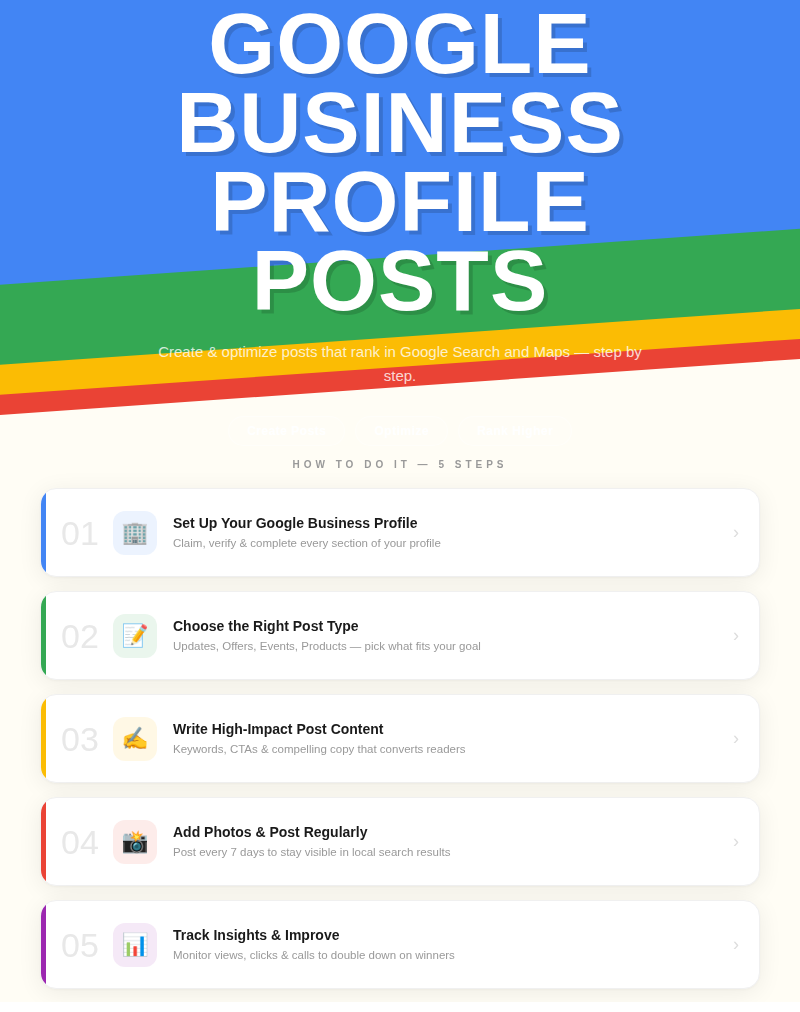
There’s no universal rule, but many US local businesses see good results with one to two posts per week. Consistency matters more than volume. Posting once every few months rarely delivers meaningful impact.
Creating a Simple Content Calendar
A basic content calendar helps maintain consistency and balance. Businesses can rotate between updates, offers, events, and products while aligning posts with promotions, seasons, and local events.
Repurposing content from blogs, emails, or social media—adapted for GBP’s shorter format—saves time and ensures messaging consistency.
Measuring Performance and Optimizing Over Time
GBP Insights provides basic metrics like views and clicks, which help identify what resonates. Tracking which posts drive calls, bookings, or website visits allows businesses to refine their strategy.
Testing different headlines, visuals, and CTAs over time reveals patterns. Doubling down on high-performing topics—while retiring outdated posts—keeps profiles effective and trustworthy.
Common Mistakes to Avoid
- Posting inconsistently or abandoning the profile
- Using low-quality or irrelevant visuals
- Keyword stuffing or spammy language
- Leaving expired offers or outdated information live
Avoiding these pitfalls protects both user trust and Google visibility.
Conclusion
Google Business Profile posts are a powerful, often underused tool for US businesses to connect with high-intent local searchers. When used strategically, they improve visibility, engagement, and conversions—all directly within Google Search and Maps.
Success comes from consistency, clarity, strong visuals, and alignment with broader local SEO and marketing efforts. Businesses that treat GBP posts as an ongoing strategy—not a one-time task—are best positioned to turn routine updates into measurable growth and long-term trust.
Frequently Asked Questions
How often should a US local business post on Google Business Profile?
Most US local businesses perform well posting once or twice per week. Consistency matters more than frequency, and posting should scale up during promotions or busy seasons.
Do Google Business Profile posts help with local SEO rankings?
GBP posts don’t directly impact rankings, but they improve engagement and profile quality, which can indirectly support local SEO and conversions.
What types of content perform best in GBP posts?
Promotions, limited-time offers, and visually rich posts perform best, while educational tips and FAQs help build trust and authority over time.
Can I reuse content from my website or social media in GBP posts?
Yes—repurposing works well when content is shortened, localized, and adapted with clear calls-to-action suited for search-driven users.